
Ever feel like you’re living your life for everyone but yourself? You’re not alone. In a world where social media shouts opinions from every corner, it’s easy to get tangled in the web of approval.
The truth? Worrying about what others think drains your energy, spikes your anxiety, and steals your opportunities. You miss out on real joy because you’re too busy chasing someone else’s version of perfect.
It’s time to flip the script. This is your year to break free. In this guide, you’ll discover how to stop caring what people think, build bulletproof self-confidence, and finally live unapologetically.
Ready to claim your power? Let’s dive in and make 2026 the year you start living for you. Here’s what you’ll learn: why we crave approval, how it holds us back, practical mindset shifts, step-by-step strategies, and how to thrive as your most authentic self.
Why We Care What People Think: The Psychology Behind Approval-Seeking
Ever wondered why you care so much about what others think? Blame your ancestors. Back in the day, being liked by your tribe literally kept you alive. If you got booted out, you were on your own, and let’s just say sabre-toothed tigers love a solo meal. That ancient wiring still lingers, making us crave approval—even if the biggest threat now is a dodgy group chat, not a wild animal.
But it’s not just biology. From the moment we could toddle, family, teachers, and society taught us the “right” way to behave. Wear this. Say that. Don’t embarrass us at Aunt Mabel’s party. These early lessons shape our self-image and bake approval-seeking right into our brains. Cultural norms add another layer, especially in communities where fitting in is survival 101. It’s no surprise that learning how to stop caring what people think can feel like trying to rewire your brain with a spanner and a prayer.
Now, let’s talk about the real beast: social media. It’s like a popularity contest that never ends. Every like, comment, or follow becomes a digital pat on the back—or a slap in the face. Research shows that the impact of social media on self-esteem is powerful, often amplifying our hunger for validation and making it harder to figure out how to stop caring what people think. The result? We curate, filter, and edit our lives, chasing approval from people we barely know.
This “disease to please” isn’t just a catchy phrase—it’s a daily reality for millions. According to the Anxiety and Depression Association of America, about 7% of adults experience social anxiety disorder, often rooted in the fear of being judged. Even those without a diagnosis feel the pressure: studies suggest that up to 30% of people routinely avoid speaking their minds to dodge disapproval. There’s a fine line between healthy social awareness (hello, not picking your nose at dinner) and toxic people-pleasing, which can leave you feeling invisible and exhausted.
Let’s break it down:
| Healthy Social Awareness | Toxic People-Pleasing |
|---|---|
| Values connection | Fears rejection |
| Sets boundaries | Says yes to everything |
| Listens to feedback | Avoids conflict at all costs |
| Stays authentic | Masks true self |
Maybe you remember being picked last for a team, or biting your tongue in meetings to avoid rocking the boat. Or perhaps you’ve felt that sting when your post flops online. These moments stick, reinforcing the belief that approval equals safety. But here’s the rebellious truth: approval-seeking is learned, reinforced, and totally unhelpful once you’re no longer dodging tigers. The beauty of learning how to stop caring what people think is that you can unlearn these habits, reclaim your voice, and finally start living in full colour.

The Hidden Costs: How Caring What Others Think Holds You Back
Ever feel like you’re tiptoeing through life, worried someone might judge your every move? You’re not alone. The emotional toll of caring too much is sneaky but relentless. Stress, anxiety, and a nagging sense that you’re never quite good enough can become your unwelcome roommates. Studies show that social anxiety, fuelled by fear of judgment, affects up to 13% of people at some point in their lives. Pair that with the constant scroll of curated lives on social media, and it’s no wonder self-esteem takes a nosedive. According to Social Media Effects on Self-Esteem, your online habits can make or break how you feel about yourself, depending on how much you let others’ opinions shape your worth.
Missed Opportunities: The Silent Dream Killers
Here’s the real kicker: worrying about how to stop caring what people think often means letting your dreams collect dust. Maybe you wanted to start a business, travel solo, or finally post your art online. But then, that inner critic pipes up, “What will they say?” Suddenly, you’re stuck in neutral, watching others live boldly while you play it safe. It’s been said that this fear has aborted many a dream and reduced the lives of most to an existence below their potential. Ouch, right? The truth is, every “what if” you don’t chase is a little rebellion against your own joy.
Relationships: Shallow Waters, No Deep Dives
Think about your connections. When you’re obsessed with how to stop caring what people think, you might end up surrounded by people who only know the polished, filtered version of you. Superficial relationships become the norm, leaving little room for real connection or honest conversation. Resentment simmers underneath, because you’re always putting others’ comfort ahead of your own authenticity. That’s not friendship or love—it’s performance art, and you deserve better.
Mental Health: The High Price of People-Pleasing
The cost isn’t just emotional—it’s mental and physical too. Chronic people-pleasing and fear of judgment are linked to higher rates of depression, burnout, and even physical symptoms like headaches or insomnia. Social withdrawal, creative block, and professional stagnation are all-too-common side effects. In fact, research shows a strong correlation between social anxiety and a persistent fear of being judged by others. That’s not just a bad day—it’s a half-lived life.
Key Insight: Reclaim Your Full, Unfiltered Life
Here’s the bottom line: the price of caring too much is far steeper than a few awkward moments or side-eye glances. Learning how to stop caring what people think isn’t about becoming cold or rebellious for the sake of it. It’s about reclaiming your energy, your dreams, and your joy. Imagine the freedom of living for yourself, not for a chorus of invisible critics. That’s not just possible—it’s your right.

Step 1: Cultivate Authentic Self-Love and Self-Acceptance
Ever wondered how to stop caring what people think? It all starts with a rebellion—against the bland, the beige, and the boring. Cultivating self-love and self-acceptance is the ultimate act of defiance. Here’s where you start painting outside the lines.

What Real Self-Love Looks Like
Let’s get one thing straight: real self-love is not selfish, and it’s definitely not about bubble baths and expensive candles (though those are nice). Real self-love is radical. It’s about knowing your worth, even on the days when you feel like a soggy crisp.
Unconditional self-worth means you matter, full stop. Not because of your achievements, your looks, or how many likes you get. It’s about treating yourself with kindness, even when you mess up.
Want to know how to stop caring what people think? Start with simple, daily habits. Try writing down three things you’re proud of each morning. Use affirmations that actually make you laugh or grin. Reflect on your strengths, not just your flaws.
Journaling about your achievements, no matter how small, rewires your brain to notice the good. Self-compassion is your shield against the world’s opinions. When you slip up, talk to yourself like you would to your best mate—not your worst critic.
Self-love is the bedrock. When you build it, you’re far less likely to crumble when someone else tries to knock you down. That’s how to stop caring what people think in the most colourful way possible.
Letting Go of Perfectionism and Comparison
Perfectionism is a sneaky thief. It convinces you that if you’re flawless, you’ll finally figure out how to stop caring what people think. Spoiler: perfection doesn’t exist (unless you count perfectly imperfect).
Social media is a highlight reel, not real life. It’s engineered to make you compare your behind-the-scenes to someone else’s airbrushed moments. Comparison keeps you stuck in a beige rut, afraid to try, fail, or shine.
Here’s your permission slip to rebel. Limit your social media scrolls. Curate your feed to fill it with people and inspiration that make you feel like a firework, not a shadow. Practice gratitude for what you have, right now.
If your wardrobe feels like it’s copying someone else’s homework, it’s time for a wardrobe detox for self-acceptance. Ditch the pieces that don’t spark joy or confidence. Unfollow accounts that trigger comparison spirals.
Progress is messy, but it’s real. The more you choose growth over perfection, the easier it gets to learn how to stop caring what people think. Every time you show up as yourself, you’re winning.
Embracing Your Unique Identity
Let’s be honest: the world doesn’t need another copy-paste version of someone else. It needs your quirks, your colours, your voice. If you want to learn how to stop caring what people think, start celebrating your uniqueness.
Make a “uniqueness inventory.” List the things that make you wonderfully weird. Maybe it’s your laugh, your love of neon, or your knack for puns. Create a vision board that reflects your wildest dreams and boldest style.
Authenticity is magnetic. In work, in love, in life—people are drawn to those who own their story. Think about the icons who made it big by refusing to blend in. Their secret? They embraced what made them stand out.
Try sharing a story about your quirks with a friend or colleague. Notice how it opens up deeper, more genuine conversations. The more you lean into your real self, the more you attract the right people and opportunities.
Living authentically is how to stop caring what people think for good. It’s not about being loud for the sake of it—it’s about being true, every single day.
Step 2: Build Resilience to Criticism and Disapproval
Ever feel like criticism is lurking around every corner just waiting to trip you up? You are not alone. Navigating a world full of opinions is tricky, but building resilience is the secret sauce for how to stop caring what people think. Let us break it down, step by step, and turn criticism from your kryptonite into your superpower.
Understanding the Nature of Criticism
Criticism is like rain in Britain: absolutely inevitable. No matter how brilliant you are, someone will have an opinion. The trick is understanding that most criticism has more to do with the critic's mood or insecurities than your actual worth. Sometimes, disapproval and dislike are fleeting, rooted in someone else's bad day or their own limitations.
There are two flavours of criticism: constructive and destructive. Constructive criticism helps you grow, while destructive criticism is more like a soggy biscuit—useless and best ignored. Imagine getting feedback at work versus someone trolling your latest Instagram post. One aims to help, the other just wants attention.
Remember, when you are learning how to stop caring what people think, it is crucial to realise that criticism is rarely a personal attack. It is often just noise in the background. Shrug it off, and move on to brighter things.
Reframing Criticism as Growth
Here is the rebellious truth: discomfort is a sign you are growing. Facing criticism head-on is like lifting weights for your confidence muscle. Each awkward moment, each bit of negative feedback, is a chance to get stronger. When you are figuring out how to stop caring what people think, start by seeing criticism as a lesson, not a verdict.
Try this: when criticism hits, pause and ask, "What can I learn here?" Sometimes, the answer is clear—maybe you really could tweak your work or approach. Other times, the lesson is about letting go of needing approval in the first place. Cognitive reframing is your best friend. Instead of spiralling, imagine you are collecting golden nuggets of wisdom.
Negative reviews on your art? Use them to level up your skills. Snarky comments on your outfit? Proof you are not blending into the beige wallpaper. The more you practice this, the less power criticism holds. Remember, how to stop caring what people think truly starts with flipping your perspective and embracing the growth that comes with discomfort.
Exposure: Practicing Discomfort Tolerance
Ready for a little rebellious homework? Building resilience means practising the art of being uncomfortable, just a smidge at a time. This is where exposure therapy comes in. Start small: share your opinion in a meeting, post your artwork online without obsessing over filters, or say "no" to something that does not light you up.
Each brave act is proof you can survive disapproval and still thrive. In fact, the more you lean in, the less intimidating it becomes. Wearing a neon jumper in a sea of neutrals? That is not just a style choice—it is a statement. For more on how bold colours can boost your confidence and help you master how to stop caring what people think, check out Building confidence with bold colours.
Think of each exposure as a mini workout for your self-esteem. The first time is hard, the tenth time is almost fun. Before you know it, you are not just tolerating discomfort—you are thriving in it.
Setting Healthy Boundaries
Let us talk about boundaries, the unsung heroes of authentic living. Boundaries are not walls, they are colourful fences that protect your peace and sanity. Setting them is essential when learning how to stop caring what people think, because you decide who gets a front-row seat to your life.
Here is how to start:
- Assertive communication: Speak your truth, even if your voice wobbles.
- Saying "no" without guilt: Your time is precious, spend it wisely.
- Limiting toxic influences: You do not owe anyone endless access to your energy.
Consider this quick table for boundary basics:
| Situation | Healthy Boundary Example |
|---|---|
| Social invitations | "Thanks, but I am taking time for me." |
| Work requests | "I cannot take that on right now." |
| Online interactions | "Mute, block, repeat as needed." |
Boundaries are not selfish, they are self-respect in action. When you focus on how to stop caring what people think, remember, boundaries help you stay true to yourself—not other people's expectations.
Step 3: Shift Your Mindset—From External Validation to Inner Confidence
Ready for a reality check? The secret sauce for how to stop caring what people think is not hiding away or pretending you don’t care. It’s swapping that old, tired external validation habit for shiny, unbreakable inner confidence. This isn’t about suddenly becoming a robot who never feels awkward. It’s about learning to spot approval-seeking in action, giving yourself the gold star, and realising other people’s opinions are as changeable as the British weather.
Recognizing and Challenging Approval-Seeking Thoughts
Let’s play detective. Every time you pause before posting a selfie or overthink a text, ask yourself, “Am I doing this because of how to stop caring what people think, or am I feeding the approval monster?” Spotting these patterns is step one. The “What will people think?” loop is sneaky, but mindfulness can help you catch it.
Grab a journal and jot down those moments when you catch yourself people-pleasing. Notice how often your choices are shaped by imaginary critics. Try thought-stopping: when you catch the old record playing, pause and redirect.
Studies show that social media can crank up the need for external validation, especially for those already sensitive to approval. If you want to dig deeper, check out this Social Media and Self-Esteem Research for a scientific look at why likes and comments feel like a shot of dopamine. Awareness is your superpower, and it’s the first tool you need for how to stop caring what people think.
Practicing Self-Validation and Internal Metrics of Success
Time to give yourself the credit you deserve. Self-validation means deciding your worth isn’t up for a public vote. Forget the external scoreboard—your effort, progress, and joy are the real prizes.
Set personal goals that make you grin, not goals that impress the crowd. Celebrate your small wins, even if no one else notices. Make a list of your weekly victories, from speaking up in meetings to finally nailing that yoga pose. Create a self-reward system—think gold stars, a cheeky treat, or just a proud smile in the mirror.
The more you practice self-validation, the more you’ll master how to stop caring what people think. Internal metrics are like a secret stash of confidence that no one can take away. Every time you reward your own growth, you reinforce the truth: you are enough, exactly as you are.
Embracing the Temporary Nature of Disapproval
Here’s the plot twist—people’s opinions are as fleeting as last season’s fashion trends. That awkward moment you replay at 3 a.m.? Bet no one else even remembers it. Most criticism is like confetti in the wind, quickly forgotten and rarely about you.
When you feel the sting of disapproval, zoom out. Will this matter in a week, a month, or next year? Probably not. Remind yourself that learning how to stop caring what people think is about choosing freedom over fear. The only approval that sticks is the one you give yourself.
Step 4: Empowering Actions—Practical Strategies to Stop Caring What People Think
Ready to shake off the weight of everyone else’s expectations? This is the part where you get practical. You want to know how to stop caring what people think, right? Here’s where you put rebellion into action. Each step is designed to help you build boldness, one colourful move at a time.
Spend Time Alone and Reconnect With Yourself
Solitude is not a punishment, it’s a secret weapon. If you’re learning how to stop caring what people think, start by getting comfortable with your own company.
Take yourself for a walk, sit in a café with your thoughts, or try meditating in a room that’s all yours. Ditch your phone for an hour and listen to what you actually want, not what social media tells you to want.
- Go on a solo adventure, even if it’s just to the park.
- Journal about what genuinely excites you.
- Try a hobby that’s just for you, not for Instagram likes.
The more time you spend alone, the clearer your values become. Suddenly, other people’s opinions shrink to background noise. Alone time is where self-trust is built. That’s your first step in how to stop caring what people think.
Practice Going Against the Grain
Here’s your permission slip to be a bit rebellious. If you want to master how to stop caring what people think, you’ll need to flex your non-conformist muscles.
Start small: Wear a colour you love but usually avoid. Share an unpopular opinion in a meeting. Try a hobby that’s “not you” according to everyone else. Every act of rebellion, no matter how tiny, chips away at the urge to blend in.
- Wear bright colours or bold patterns just because you fancy it.
- Say no to plans that don’t excite you.
- Post something honest (not curated) online.
Curious how to use your wardrobe as a tool for self-expression? Check out these tips to break free from a boring wardrobe and let your style do the talking. Each little rebellion is a lesson in how to stop caring what people think.
Detach From the Need to Be Liked
Here’s a radical truth: Not everyone will like you. In fact, some people might not get you at all. That’s not just normal, it’s brilliant. If you’re focused on how to stop caring what people think, start by letting go of the idea that you need to be universally adored.
Ask yourself, would you rather have a handful of genuine connections, or a mob of “meh” acquaintances? Quality always trumps quantity.
- Review your social circles—who energises you, who drains you?
- Release toxic friendships with zero guilt.
- Remember, your tribe will find you when you show up as yourself.
Releasing the need for approval is the most freeing part of how to stop caring what people think. Suddenly, you’re living for you, not the crowd.
Open Up to Constructive Criticism and Compassion
Let’s get real. Not all feedback is an attack. Sometimes, it’s a gift. When you’re on the journey of how to stop caring what people think, the trick is telling the difference between helpful critique and pointless noise.
Welcome the feedback that helps you grow. Respond to criticism with curiosity, not defensiveness. And don’t forget, having compassion for others makes their opinions feel a lot less threatening.
- Listen for the lesson, not just the sting.
- Thank people for feedback, then decide if it’s worth keeping.
- Show yourself the same compassion you’d show a friend.
The more you practice this, the easier it is to brush off the rest. Compassion is your shield, and growth is your reward. This is a crucial part of how to stop caring what people think.
Living Unapologetically: Thriving as Your Authentic Self in 2026
Ever wondered what life looks like when you finally crack the code on how to stop caring what people think? Imagine waking up and feeling genuinely excited to be you—no filters, no apologies, just pure, unfiltered confidence. That’s the magic of living unapologetically. It’s not about being loud for the sake of it, but about owning every quirky, colourful bit of yourself and giving the world a front-row seat.
Living this way isn’t just a nice idea, it’s a game-changer. When you truly stop worrying about others’ opinions, your confidence skyrockets. You start chasing wild dreams, getting creative with your style, and actually enjoying the ride. Research shows that authenticity is closely linked to higher levels of well-being and happiness. People who embrace their true selves report feeling more fulfilled and less stressed—sounds pretty fabulous, right?
But here’s the best part: your boldness is contagious. Every time you show up as your real self, you give others permission to do the same. Think about it—remember the friend who wore neon trainers to work or the colleague who pitched a “crazy” idea in a meeting? Their courage made it easier for you to take your own risks. That’s the ripple effect of authenticity. You’re not just changing your own life, you’re inspiring a whole crowd to follow suit.
So, how do you actually live out how to stop caring what people think in your daily routine? Start by setting intentions each morning. Remind yourself what really matters to you—not just what looks good on the ‘gram. Affirm your values and let them guide your choices, from your wardrobe to your work. Surround yourself with people who cheer for your weirdness, not ones who want you to blend in.
Here’s a cheeky tip: turn your uniqueness into your superpower. Create a vision board with all the things that make you, well, you. Or jot down three ways you stood out this week—big or small. If you need a little nudge to embrace your own style, check out Your personal colour wardrobe guide for inspiration on how to wear your confidence (literally).
Let’s be honest, learning how to stop caring what people think isn’t a one-off event. It’s a daily choice—a rebellious, joyful journey with a few wobbles along the way. But every step you take is proof that you’re living life on your own terms. And that, darling, is the ultimate power move.
Empowerment Through Colour: The Colour Rebel Approach to Confidence
Ready to toss beige out the window and let your true colours fly? Welcome to The Colour Rebel Studio, where we believe that learning how to stop caring what people think starts with a splash of unapologetic colour. Forget blending in. Here, confidence is painted in bold strokes, and playing small is so last season.
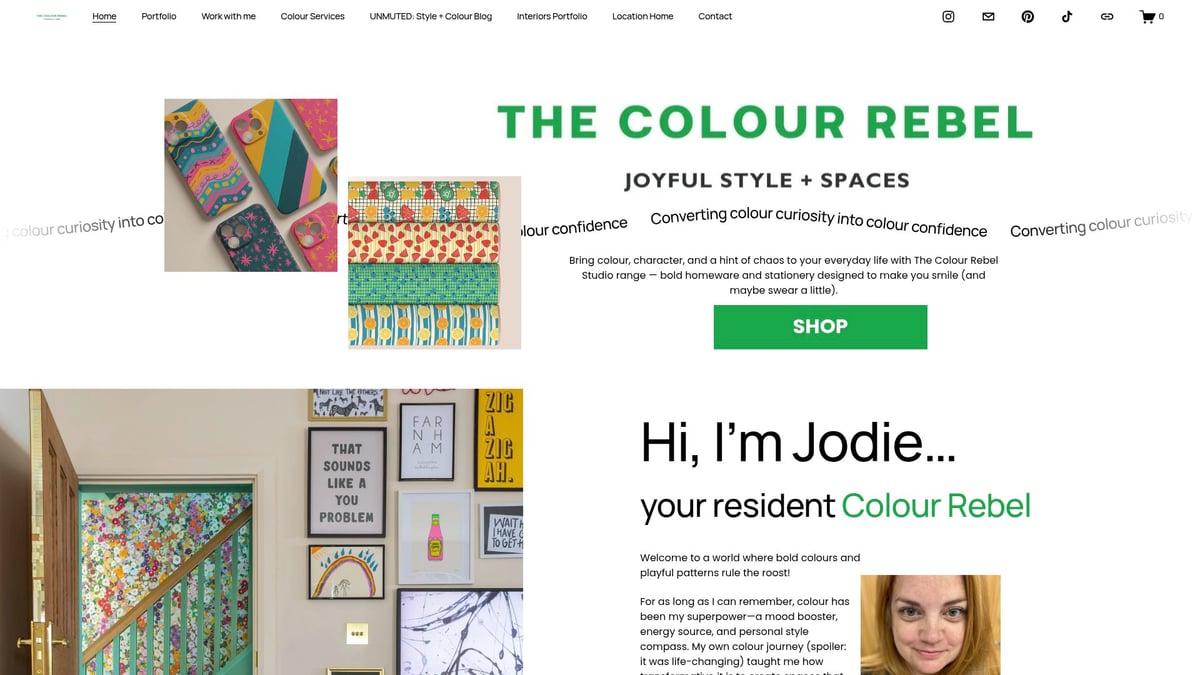
You know those days when you throw on something vibrant and suddenly feel like you can take on the world? That’s not magic, it’s science. Colour has a powerful effect on your mood, confidence, and even how others perceive you. Research in design and wellness shows that surrounding yourself with uplifting hues can reinforce self-worth and authenticity. If you want proof that colour helps you learn how to stop caring what people think, just ask the rebels who swapped neutrals for neon and never looked back.
| Colour | Mood Boost | Confidence Level | Perception by Others |
|---|---|---|---|
| Bright Red | Energised | High | Bold, assertive |
| Sunshine Yellow | Cheerful | Upbeat | Friendly, creative |
| Electric Blue | Calm, focused | Assured | Trustworthy, unique |
| Vibrant Green | Refreshed | Balanced | Open, authentic |
Take Sarah, for example. She ditched her safe wardrobe after a Colour Rebel consultation and started rocking playful prints at work. Not only did she feel more empowered, but she also cared far less about background whispers or raised brows. That’s the power of colour when you’re on a journey to figure out how to stop caring what people think.
Here are just a few ways The Colour Rebel Studio can help you:
- Bespoke colour consultations to find your personal palette.
- Wardrobe analysis that weeds out the drab and celebrates the fab.
- Creative memberships for ongoing inspiration and courage-boosting community.
Our mission is simple: get you out of your comfort zone and into a life bursting with colour, confidence, and cheeky self-expression. Stop second-guessing. Start living boldly. If you’re ready to discover how to stop caring what people think, explore our resources, connect with fellow rebels, and make every day your most vibrant yet.
You’ve made it this far, so clearly you’re ready to stop shrinking yourself and start living in full, unapologetic colour. Ditch the people pleasing, embrace your quirks, and let’s turn up the volume on your confidence—loud and proud. If you’re craving a daily burst of inspiration to help you rebel against the beige and trust your instincts (plus a cheeky nudge to wear that wild pattern), I’ve got just the thing. Your inbox deserves a splash of joy and a shot of rebel spirit—because why fit in when you were born to stand out?
Sign up for daily colour confidence + rebel style inspo
0 comments