

Pattern lovers, rejoice! In 2026, seamless pattern design is making waves everywhere, from bold wallpapers to that wild phone case you secretly want. Ready to ditch dull and master this art? You’re in the right place.
This guide will take you from the basics of seamless pattern design to the latest digital wizardry. Whether you sketch on paper, mix it up with hybrid methods, or go full digital, we’ve got your back.
We’ll explore creative foundations, step-by-step techniques, modern tools, and future trends. Fancy a dash of joy and rebellion in your work? Let’s jump in and unleash your pattern power.
Understanding Seamless Patterns: Foundations and Aesthetics
Seamless pattern design is the secret sauce behind everything from your favourite patterned trainers to those wild, joy-sparking wallpapers. At its core, seamless pattern design creates a repeating visual rhythm that can stretch infinitely without visible joins. This magic trick means motifs flow smoothly across any surface, making products, spaces, and screens feel unified, expressive, and downright irresistible.
But where did this all start? Humans have been obsessed with pattern for centuries. Think ancient textiles, intricate mosaics, and block-printed fabrics. Fast forward to today, and seamless pattern design has jumped from hand-carved wood blocks to the digital realm. Now, anyone with a sketchbook or a tablet can create endless repeats for fashion, homewares, or digital backdrops.
Let’s break down the main types of seamless patterns you’ll spot in the wild:
| Pattern Type | Description | Visual Vibe |
|---|---|---|
| Grid | Motifs repeat in neat rows and columns | Orderly, crisp |
| Half-drop | Each row shifts motifs halfway down | Flowing, dynamic |
| Brick | Motifs offset like bricks in a wall | Structured, playful |
| Tossed | Motifs scattered in all directions | Organic, lively |
Each type of seamless pattern design brings its own mood and movement. Grids are classic and reliable, perfect for minimalist lovers. Half-drop and brick repeats add a playful twist, making patterns feel less rigid and more hand-crafted. Tossed patterns? They’re pure energy, ideal for bold interiors or standout fashion.
Why does seamless pattern design matter? It’s all about visual flow and unity. When done right, your eye glides over the surface, never hitting a jarring edge or awkward seam. This creates harmony on everything from a statement wall to a phone case. It’s a rebel move against boring, plain surfaces—injecting personality wherever it lands.
The applications are endless. Seamless pattern design rules the world of textiles (think dresses, scarves, bedding), wallpapers, ceramics, tech accessories, and digital media. Even brands like Marimekko and Liberty London have built their reputations on iconic, endlessly repeating designs. In the digital age, custom seamless pattern design is exploding on print-on-demand platforms and in interiors, with demand growing year after year.
Precision is the name of the game. Every edge, corner, and motif must line up perfectly. If you’ve ever spotted a wallpaper where the flowers don’t match up, you know how quickly a design can go from fabulous to flop. That’s why mastering seamless pattern design is a badge of honour for any creative rebel.
For those itching to dive deeper, resources like the Pattern Playbook offer step-by-step guides and inspiration to make your seamless pattern design skills unstoppable.
Whether you’re dreaming of launching your own print collection or just want to jazz up your next DIY project, seamless pattern design is your ticket to standing out. The only limit? Your imagination.
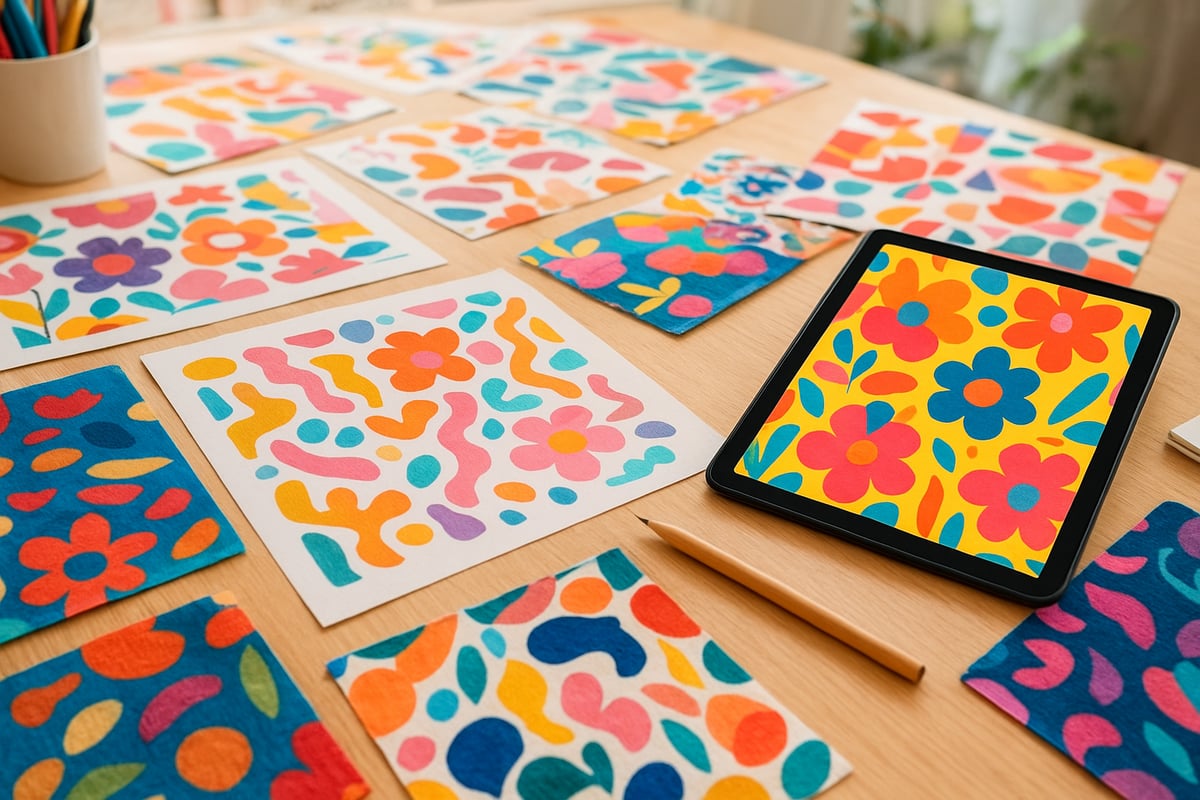
Step-by-Step Guide: Creating Seamless Patterns by Hand
Ready to get your hands messy? There’s something magical about starting your seamless pattern design journey with paper, pencils, and a dash of rebellion. Before you dive headfirst into digital wizardry, let’s strip things back to basics—where creativity and a pair of scissors rule the day.
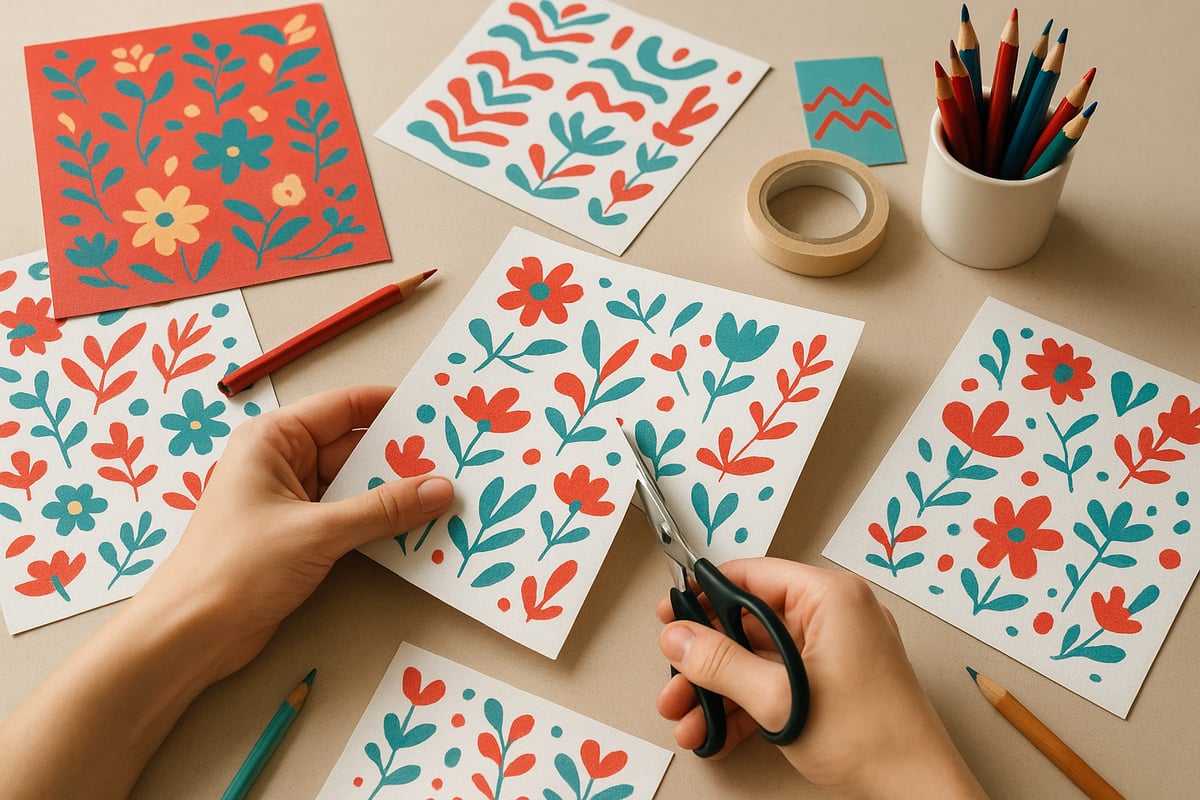
Why Go Old School with Seamless Pattern Design?
Starting by hand gives you the freedom to experiment, make glorious mistakes, and truly understand how patterns flow. It’s tactile, it’s honest, and it teaches you what digital can’t: how to feel the rhythm of repetition.
Tools and Materials You’ll Need
Let’s keep it simple. Here’s your rebel kit for seamless pattern design:
| Item | Purpose |
|---|---|
| Paper | Your canvas for creativity |
| Pencil | Sketching your bold motif |
| Scissors | Cutting for the repeat magic |
| Tape | Swapping and securing edges |
| Eraser | Fixing those happy accidents |
| Scanner/Phone | Digitising your masterpiece |
Step-by-Step: Craft Your Seamless Pattern Design by Hand
-
Draw Your Central Motif
Start in the middle of your paper. Don’t let your motif touch the edges—keep it centre stage and avoid the dreaded cut-off. -
Cut and Swap the Edges
Now for the rebellious bit. Cut your paper in half vertically, swap the sides, and tape them together. Repeat horizontally. Your once central motif now sits at the edges, ready to create a seamless pattern design. -
Fill the Centre Gap
See that empty middle? Fill it with new motifs, but again, don’t touch the edges. This keeps your seamless pattern design looking, well, seamless. -
Duplicate Your Tile
Photocopy, scan, or snap a photo of your tile. Print or copy it out a few times, then piece them together to check the flow. If you spot a wonky join, don’t panic—just tweak and repeat. -
Assemble and Adjust
Lay out your tiles in a grid. If your seamless pattern design looks continuous, you’ve nailed it. If not, time for a little more cutting and sticking.
Inspiration and Real-World Examples
Julia Rothman’s Skillshare method is a cult classic for a reason—her cut and swap technique is a rite of passage. Over on HGTV Handmade, you’ll find crafty hacks for bold, DIY repeats. Love getting inky? Handprinted’s lino block process takes seamless pattern design to printmaker territory.
Need a blast of visual inspiration? Check out the Seamless Pattern Trend 2025/2026 for the latest jaw-dropping ideas lighting up the design world.
Tips, Troubleshooting, and Cheeky Wisdom
- Don’t crowd your edges! That’s the fastest way to spot a seam.
- Use low-tack tape so you don’t tear your masterpiece.
- If scanning, crank up the contrast for crisp lines.
- Start simple, then get wild. Complexity can come later.
- Most designers—over 60% in some surveys—begin their seamless pattern design by hand before digitising. It’s all about finding your flow.
Remember, every pattern has its own personality. The best seamless pattern design starts with a bit of chaos, a lot of colour, and a spirit that refuses to be muted.
Hybrid Pattern Design: Bridging Traditional and Digital
Hybrid pattern design is like having your cake and eating it—messy fingers and all. It’s the sweet spot where hand-drawn magic meets digital polish. In seamless pattern design, hybrid methods let you start with real-world tools, then hop over to the digital playground for editing, repeating, and scaling up.
Why bother with hybrid? Simple. You get all the quirks, textures, and energy of handmade art, plus the flexibility and precision of software. Your patterns feel alive, not manufactured. That’s why brands and indie designers alike are obsessed with this approach. The result? Seamless pattern design that stands out in a sea of sterile pixels.
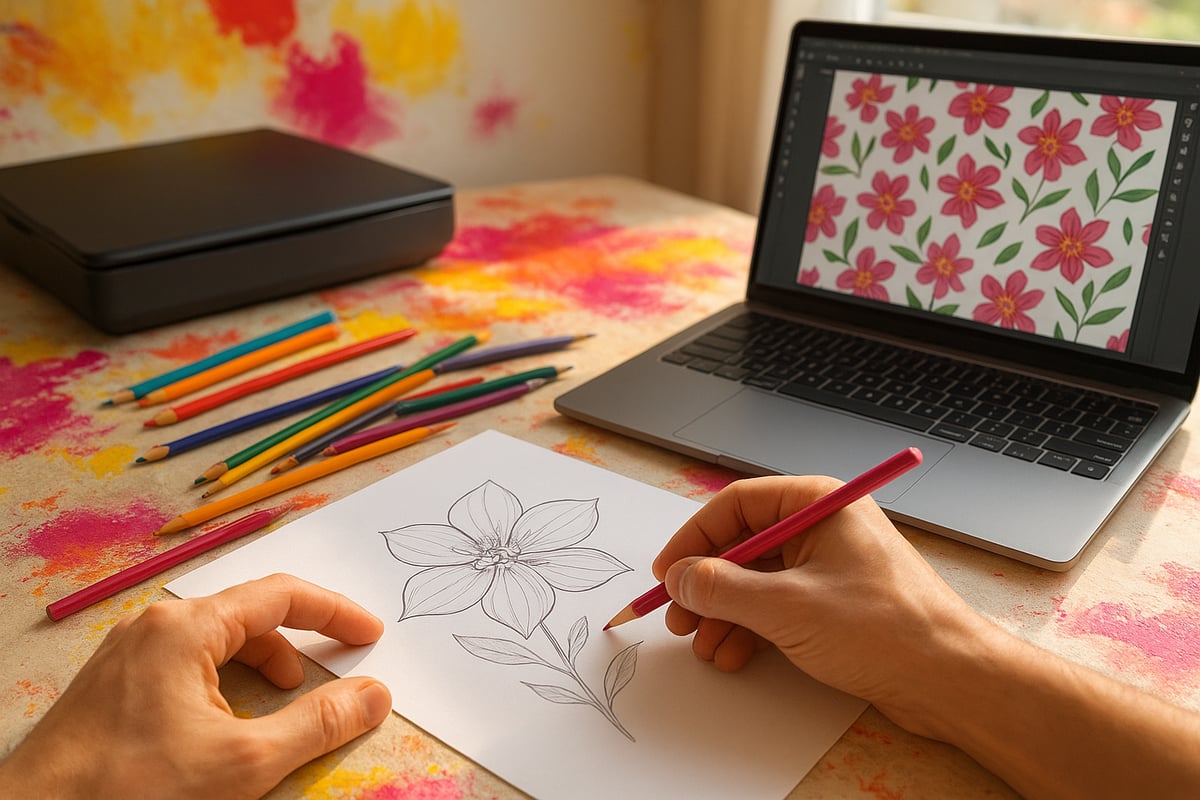
What is Hybrid Pattern Design?
Hybrid pattern design is the rebellious middle child of the pattern world. You start with a hand-drawn motif—maybe on paper, maybe with watercolours, maybe even with lino printing. Then, you digitise it by scanning or photographing. This keeps your unique touch alive, while opening the door to seamless pattern design wizardry on-screen.
Let’s break it down:
- Hand-drawn first: Get messy, make mistakes, embrace the wobbly lines.
- Digitise: Use a scanner for sharpness or your phone for convenience.
- Edit: Bring your art into Photoshop, GIMP, or Procreate.
The hybrid approach is perfect for anyone who wants their seamless pattern design to look human, not robotic.
From Sketchbook to Screen: Digitising Your Art
Ready to turn your doodles into digital gold? Scanning is your best mate for crisp, colour-true files. Use at least 300dpi—no one likes a blurry repeat. If you’re snapping a photo, do it in bright, even light and keep your camera parallel to the paper.
Once your motif is digital, open it in your favourite software. Crop out the messy bits (unless you love imperfection), adjust contrast, and clean up the background. This step is crucial in seamless pattern design, making sure your motifs pop and your repeats are sharp.
| Method | Pros | Cons |
|---|---|---|
| Scanning | Crisp, colour-true | Needs a scanner |
| Photograph | Quick, flexible | Can be uneven lighting |
Editing, Arranging, and Perfecting Your Repeat
Here’s where the magic happens. In Photoshop or GIMP, use layers to arrange your motifs inside a square or rectangle. Keep an eye on the edges—seamless pattern design lives or dies by perfect alignment.
Use the offset filter to test your tile. If you spot a seam, use the clone tool or a soft eraser to blend. Pro tip: Don’t over-edit. The world is loving the “perfectly imperfect” look right now, as seen in Imperfect by Design: 2026 Visual Trends.
Checklist for hybrid pattern editing:
- Clean background
- Aligned edges
- Consistent colour
- No visible seams
Real-World Workflows and Industry Trends
Pepo Studios’ watercolour-to-Photoshop workflow is a cult favourite for a reason. Mel Armstrong’s gouache patterns go from sketchbook to screen in hours, not days. Hybrid workflows are booming—data from 2025-2026 shows over 60% of professional surface designers use a hybrid approach for seamless pattern design.
Why? Because clients, brands, and buyers want authenticity. Hybrid design delivers that tactile, human feel while still ticking every digital box. The future of seamless pattern design is bright, bold, and just a bit rebellious.
Mastering Digital Seamless Pattern Design
Ready to rebel against boring design? Digital tools have flung open the doors to a new world of seamless pattern design. Gone are the days of endless tracing and sticky tape—now, you can create, test, and tweak patterns with pixel-perfect precision. If you crave speed, scalability, and the power to experiment wildly, digital is your new BFF.
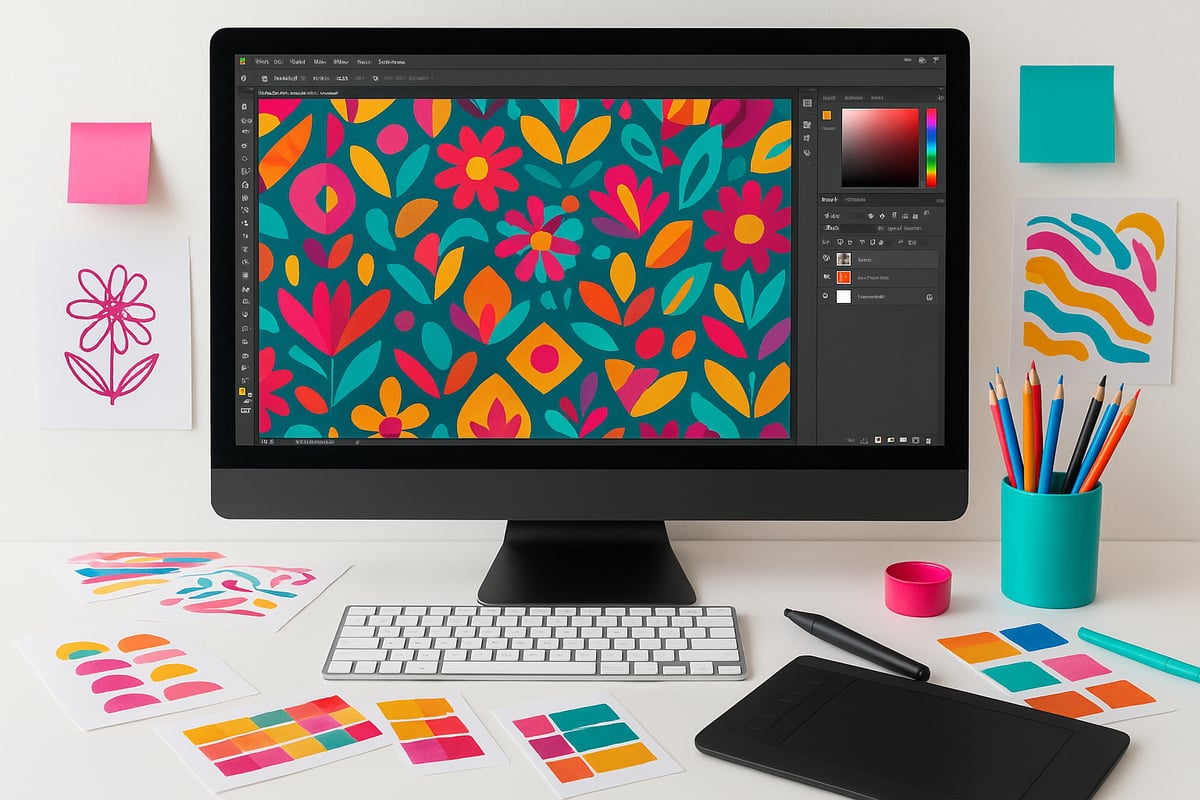
Why Go Digital? The Rebel’s Advantage
Why bother with digital for seamless pattern design? Simple—control, flexibility, and pure creative chaos (the good kind). Digital platforms let you duplicate, scale, and recolour motifs in seconds. They offer non-destructive editing, so you can experiment without fear. Plus, you get infinite undo, which is basically magic for perfectionists and rebels alike.
Want to whip up a pattern for a mug, wallpaper, or an entire runway collection? Digital tools make exporting in any format or size ridiculously easy. It’s the rebel way—work smart, not hard.
Which Software Reigns Supreme?
Choosing your digital weapon is half the fun. Here’s a quick cheat sheet for seamless pattern design:
| Software | Best For | Standout Feature |
|---|---|---|
| Photoshop | Photo-based motifs | Offset filter |
| Illustrator | Vector repeats | Pattern tool |
| Inkscape | Free vector editing | Tiling effects |
| Canva | Beginners, quick edits | Quadrant swap |
| Procreate | Drawing on iPad | Square canvas |
| PowerPoint | Accessibility | Copy-paste ease |
Each tool has its quirks. Photoshop and Illustrator are industry gold, but don’t overlook free rebels like Inkscape—or even PowerPoint for surprisingly decent repeats. For seamless pattern design, pick the platform that feels like a playground, not a prison.
How to Create a Seamless Pattern Digitally: Step-by-Step
Let’s break it down. Here’s how you can master seamless pattern design like a pro (or a very clever amateur):
-
Set Up Your Canvas: Open your chosen software. Create a square or rectangle canvas (typically 1000x1000 px for starters). Set your resolution to 300 DPI for print or 72 DPI for web. Lock in your colour profile (CMYK for print, RGB for digital) to avoid nasty surprises later.
-
Draw or Import Motifs: Sketch your elements or import hand-drawn art. Keep motifs inside the canvas edges for now. Use layers to separate each element—trust me, you’ll thank yourself later.
-
Arrange Within the Tile: Place motifs thoughtfully. Avoid clustering everything in the centre. Variety is your secret weapon for seamless pattern design that doesn’t look like a broken record.
-
Test the Repeat: In Photoshop or GIMP, use the Offset filter to shift the design and spot any awkward gaps. In Illustrator, use the Pattern tool to preview repeats instantly. Canva fans, try the quadrant swap: duplicate and move pieces to each corner, then fill in the middle.
-
Refine and Export: Clean up stray pixels, balance your composition, and double-check colours. Export as PNG, JPEG, or TIFF—whatever your project demands.
Want a quick test? Tile your exported pattern in a new document and see if the repeat is flawless. If not, tweak and repeat.
Real-World Techniques: Canva, Inkscape, Procreate & More
Let’s get specific. Canva’s quadrant swap is genius for beginners: split your design into four, move each piece to the opposite corner, then fill the gaps. Inkscape’s move-by-page-width hack and Path Effects make brick or half-drop repeats possible, even for those on a budget. Procreate rebels can use a square canvas, draw motifs, then duplicate and snap layers to test the repeat.
PowerPoint might sound like a wild card, but it’s surprisingly handy for basic seamless pattern design. Just copy, paste, and nudge tiles into place. Sure, it’s not perfect, but it’s great for quick mockups or presentations.
IronEcho Design’s Inkscape tutorials are gold for advanced repeats. And if you crave watercolour magic, check out Pepo Studios’ workflow from paper to Photoshop. The rebel toolkit is overflowing—use what sparks joy.
Rebel Tips: Flawless Patterns Every Time
Want seamless pattern design that sings? Here’s how to dodge the most common pitfalls:
- Use guides and snapping to keep motifs aligned.
- Avoid placing important details right on the edge—unless you want accidental seams.
- Layer masks or the clone tool fix stray pixels fast.
- Test with mockups (cushions, mugs, wallpapers) to see patterns in action.
- Always double-check colour profiles before exporting. Digital screens lie—printers never forgive.
Remember, even pros tweak and retest. Perfection is a myth, but a flawless repeat is within reach.
The State of Digital Pattern Design in 2026
Digital seamless pattern design now leads the creative rebellion. In 2026, more than 80% of surface designers favour digital-first workflows for speed and flexibility. Print-on-demand platforms and licensing agencies demand crisp, scalable patterns.
The market for seamless pattern design in fashion and interiors is booming. According to the U.S. Seamless Apparel Market Outlook, demand for custom digital patterns is set to skyrocket from 2026 onwards. Want to join the movement? There’s never been a better time to master digital pattern wizardry.
Applications and Trends: Seamless Patterns in 2026
Seamless pattern design is everywhere in 2026. If you can put a pattern on it, brands and rebels alike are doing it. From bold wallpaper and statement sofas to trainers, phone cases, and even virtual spaces, seamless pattern design is turning the world into a riot of colour and joy.
Where Patterns Pop: Fashion, Interiors, and Tech
Fashion designers are unleashing seamless pattern design on everything from oversized coats to trainers. Interiors? Patterned wallpapers, bedding, and even lampshades are in the spotlight. Want your home to radiate personality? Start with colour and pattern. Check out these tips to make your home pop with colour and see how easy it is to rebel against beige.
Tech accessories are no wallflowers either. Patterned phone cases, laptop sleeves, and wearable tech are now must-have canvases for creative expression. Even digital planners and app backgrounds are getting a seamless pattern design makeover.
Print-on-Demand, Licensing, and Designer Goldmines
The print-on-demand boom has made seamless pattern design a goldmine for independent designers. Platforms like Spoonflower, Printify, and Redbubble have very specific requirements: files must be high-res, perfectly repeatable, and colour-accurate.
Licensing is big business. Brands and manufacturers want patterns that are unique, bold, and versatile. Designers who master seamless pattern design can license their work for everything from yoga mats to wallpaper, earning royalties while sipping an oat flat white.
Maximalism, Sustainability, and Digital Frontiers
Maximalism is in and subtlety is out. According to 2026 trend reports, 68 percent of consumers crave bold, layered patterns and unapologetic colour. If you want to see what’s hot for walls, have a peek at the 2026 Wallpaper Trends—think oversized botanicals, block-prints, and a fearless clash of hues.
Sustainability is non-negotiable. Eco-friendly inks, recycled materials, and digital pattern design that reduces waste are all in demand. Ethical brands are seeking seamless pattern design that looks good and does good.
AR and VR are taking seamless pattern design into the metaverse. Digital textiles, virtual fitting rooms, and 3D-rendered interiors mean your patterns can live in both real and virtual worlds. The future is not just wearable, it’s immersive.
Data, Demand, and the Future
Here’s the juicy bit: The global surface pattern design market is predicted to grow by 22 percent in 2026. Customisation is queen—shoppers want designs that feel personal, expressive, and just a little rebellious.
So, whether you’re dreaming up maximalist wallpaper, launching your own print-on-demand shop, or creating digital art for virtual spaces, seamless pattern design is your ticket to creative freedom. The only rule? Make it bold, make it yours, and never settle for neutral.
Resources, Tools, and Learning Pathways
Ready to turn your seamless pattern design dreams into reality? Let's load up your creative toolkit. The right mix of digital and hands-on resources will supercharge your skills, whether you fancy free software or crave premium power. Here’s a quick comparison to help you find your fit:
| Software | Free/Paid | Best For |
|---|---|---|
| Inkscape | Free | Vectors, half-drop |
| Canva | Free/Paid | Beginners, quick edits |
| Procreate | Paid | iPad, hand-drawn look |
| Photoshop | Paid | Pro editing, raster |
| GIMP | Free | Photoshop alternative |
Test a few and see which feels like magic in your hands. Seamless pattern design is all about finding your groove.
Learning Resources and Communities
Want to learn from the best? Dive into Skillshare for deep-dive courses, or binge YouTube tutorials from legends like IronEcho Design, Pepo Studios, and Mel Armstrong. These creators don’t just teach— they show you every messy, magical step of seamless pattern design.
Find inspiration and feedback in communities like Dribbble, Behance, and Patternbank. Share your progress, ask for real talk, and swap ideas with fellow rebels. If you’re ready to push your colour and pattern skills even further, check out Mastering colour and pattern pairing for a fresh take on creative combinations.
Short on time? Use tiling previewers and mockup generators to test your repeats. No more guessing if your pattern will look fab on a cushion or a phone case.
Pro Tips for Portfolio and Production
Dreaming of seeing your seamless pattern design in the wild? Start building a knockout portfolio. Show off your repeats on everything from textiles to digital screens. Use high-res scans or pro-level photos for crisp, true-to-life colours.
When prepping files for licensing or print-on-demand, double check specs—every platform has its quirks. Want to see your patterns in real homes? Explore Interiors colour services to spark ideas for applying your designs to dreamy decor.
A hot tip: In 2026, most designers learn via video platforms and online workshops. The future is bold, bespoke, and bursting with opportunity. Ready to jump in? Your journey in seamless pattern design starts now.
Ready to take your newfound pattern prowess and splash it all over your world? Seriously, you’ve just unlocked the secrets to seamless design—so why stop at the basics? If you’re itching for more daily inspo, bold colour tips, and a cheeky nudge to rebel against all things neutral, I’ve got you. Let’s keep the creativity (and the sarcasm) flowing—because confidence with colour is a habit, not a fluke. Sign up to join our tribe of joyful rule-breakers and get your daily dose of style rebellion right here:
Sign up for daily colour confidence + rebel style inspo
0 comments